
Stories From Our Past
When I was a teenager, my love for local history began thanks to my father, Charles Sommers, who owned a printing business. One night, he brought home a copy of a rare, out-of-print book he had been commissioned to reprint. The book was Edmund L. Starling’s History of Henderson County, the earliest definitive “biography” of our community. Opening those pages, I was drawn into the fascinating details of Henderson’s history, and I’ve been hooked ever since.
For almost 30 years, I have led walking and bus tours to introduce visitors and locals to Henderson’s rich history. During those years, I have discovered that the stories of Henderson’s past come from the remarkable people, hidden landmarks and unexpected moments that have shaped our community. As Henderson Living celebrates its 10th anniversary, I would like to share some of the historical snapshots I have gathered that make my own “Henderson living” so rewarding.
Richard Henderson
Before the Revolutionary War, Richard Henderson, a North Carolina land developer, had a vision to create a 14th colony that he intended to name Transylvania. To that end, Henderson negotiated to buy thousands of acres of land from the Cherokees. Virginia, which claimed the Kentucky territory Henderson had purchased, refused to recognize the transaction. Later, Virginia and North Carolina agreed to compensate the Transylvania Company for its lost investment and issued consolation land grants that eventually led to the founding of Henderson and Nashville, Tennessee.
After Henderson died in 1785, his land company, the Transylvania Company, lived on and arrived here in the summer of 1797. German pioneers who had settled here in 1791 named the area Red Banks, a nod to the high bluffs of red earth that rise 72 feet above the Ohio River. When Transylvania Company agent Samuel Hopkins, surveyor Thomas Allin and lawyer Henry Purviance platted the land, they named the new town after their company founder, Richard Henderson.
Wide Main and Elm Streets
The Transylvania Company spent just one week platting the land, and it purposefully designed Henderson with four wide streets running parallel to the Ohio River and 25 broad streets intersecting them. To attract prospective settlers, the company distributed promotional advertisements specifying that purchasers of a town lot were required to build a framed, hewed or sawed log house at least 16 feet square with a plank floor. Henderson’s unusually wide streets reassured buyers that the spacious layout would help prevent a routine cabin fire from leaping across the street and destroying neighboring wooden homes.
Modern-day Henderson retains those same generous widths on Main and Elm streets, creating uniquely wide and beautiful boulevards with diagonal downtown parking on both sides.
Tobacco and Henderson Wealth
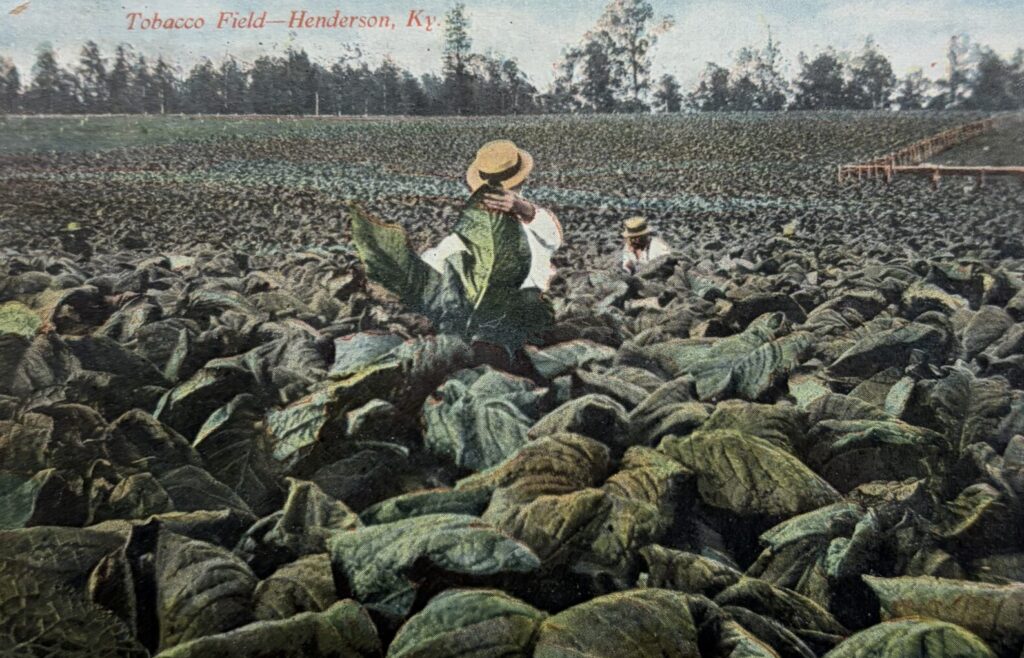
In 1801, the state legislature designated Henderson as an official tobacco inspection port, requiring tobacco from across the region to be inspected and graded before being shipped downriver. Around the same time, Henderson became part of the western Kentucky region known for producing a particular strain of dark tobacco that quickly became popular and was exported in great quantities to Great Britain and continental Europe.
Tobacco sales eventually made Henderson reportedly the largest dark tobacco market in the world, with 18 tobacco stemmeries operating in the county during the late 1800s. The sheer volume of cash flowing into Henderson created a remarkably high concentration of millionaires relative to its modest population. Many of the opulent homes lining Henderson’s streets were built by families whose wealth came from tobacco merchants, exporters and stemmery owners.
John James Audubon
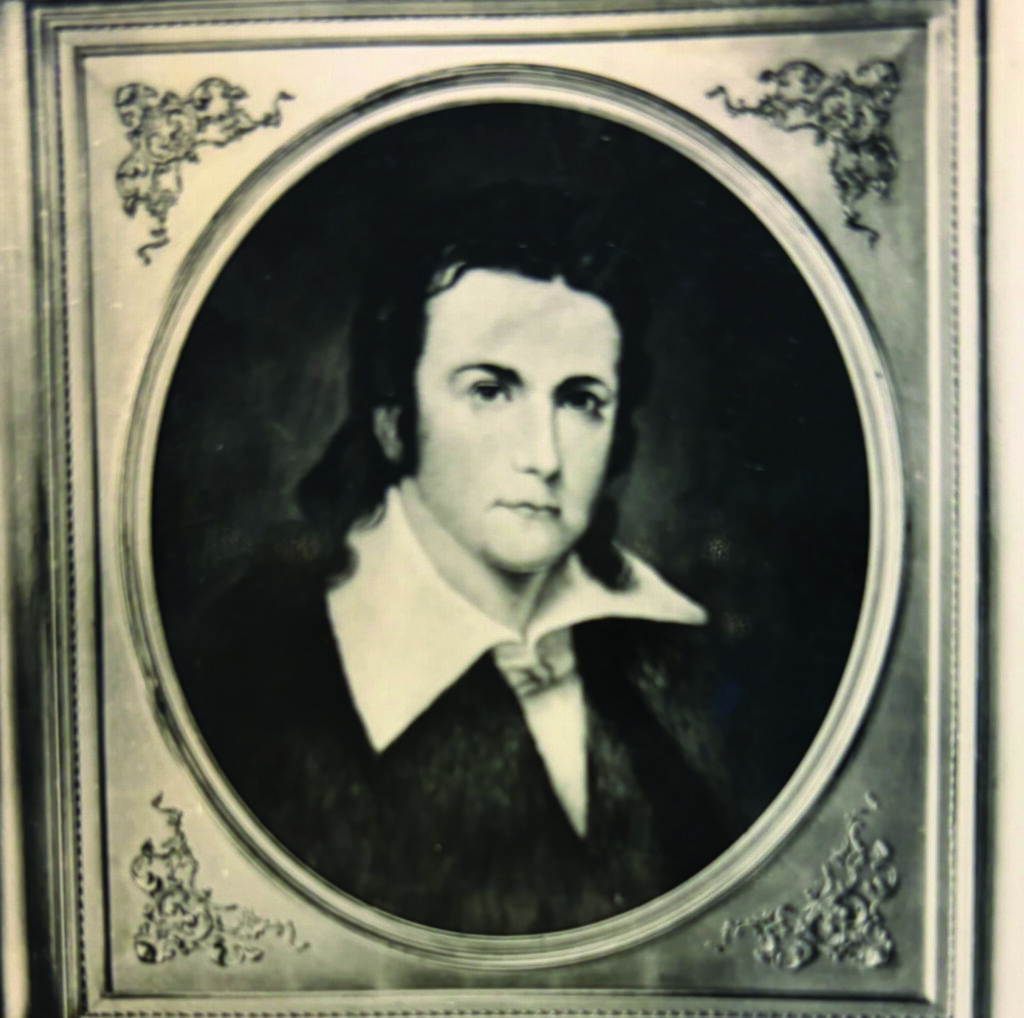
Visitors who come to Henderson to visit John James Audubon State Park and its museum are often unaware of Audubon’s downtown connections. Long before he became famous, Audubon lived in Henderson from 1810 to 1819, the longest period he lived in any one place.
After arriving from Louisville, Audubon opened a dry-goods store and family cabin on the northwest corner of North Main and Second streets. Early records show the store sold guns, fishing equipment, flour, buffalo robes, dress patterns, sugar, boots, saddlebags and much more.
In 1816, Audubon and his brother-in-law, Thomas Bakewell, invested $15,000 to build a four-story, steam-powered sawmill and gristmill on the riverfront at the foot of Second Street. Although it operated from 1817 to 1819, the venture ultimately failed because of a lack of business, faulty equipment and a severe drought. Local legend adds that Audubon had the unhealthy habit of leaving both businesses unattended while pursuing his true passion of tracking and sketching wildlife.
Audubon left Henderson, as he later wrote, “keeping only the clothes I wore on that day, my original drawings, and my gun, and without a dollar in my pocket,” and walked to Louisville. There, because of his financial difficulties, he was briefly placed in debtor’s prison.
Today, Audubon Mill Park, named in honor of the historic mill, sits on the riverfront between First and Second streets and is home to both the W.C. Handy Blues & BBQ Festival and the Bluegrass in the Park Folklife and Music Festival.
Stovepipe Johnson
A historic marker in front of the courthouse tells the story of Henderson native Adam Rankin “Stovepipe” Johnson. Johnson, who reportedly grew up in a home near the site where Simon’s Shoes now stands, joined the Confederate Army when the Civil War began.
On June 30, 1862, Johnson and two members of his Breckinridge Guards — Robert Martin and Amplias Owen — launched a surprise two-hour attack on a company of Federal soldiers housed at the National Hotel, a two-story brick building located on the east side of North Main Street near 422 N. Main St. One Union soldier was killed and several others were wounded, but Johnson and his men escaped unharmed.
On July 17, Johnson marched his Confederate force back into Henderson, seized the courthouse and flew the Confederate flag over the town for the day. Johnson’s claim to fame came the following day when he seized Newburgh, Indiana, the first town in a Northern state captured during the Civil War. Johnson and about 30 rangers gathered across the Ohio River from Newburgh. Lacking artillery, they propped empty stovepipes on wagon wheels and positioned them to resemble heavy cannons aimed at the town. Johnson then crossed the river, pointed to his “artillery” and demanded surrender. Believing they were outgunned, Newburgh officials surrendered the town, its weapons and its supplies without a single shot being fired.
From that day forward, Adam Rankin Johnson became known as “Stovepipe.”
Mary Towles Sasseen Wilson
Henderson teacher Mary Towles Sasseen, who lived with her mother at 232 S. Main St., launched a special Mother’s Day celebration with her Center Street School students on April 20, 1887, the anniversary of her mother’s birthday.
To spread her vision, she published a 32-page booklet, Mother’s Day Celebration, in 1893. The publication served as a blueprint illustrating the profound impact of mothers. Sasseen then traveled across the country advocating for the holiday.
Sasseen left Henderson in 1904 when she married Judge William Wilson and moved to Florida. In a cruel twist of fate, both she and her infant died during childbirth in 1906, denying the innovator of Mother’s Day the opportunity to become a mother herself.
First Vehicle Bridge Over the Ohio
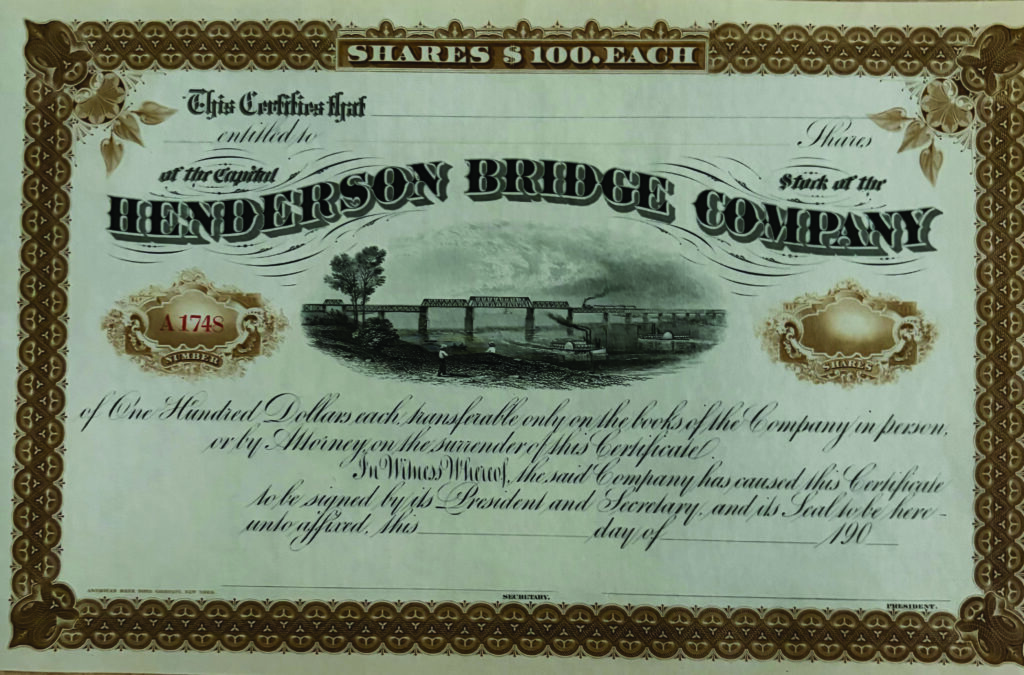
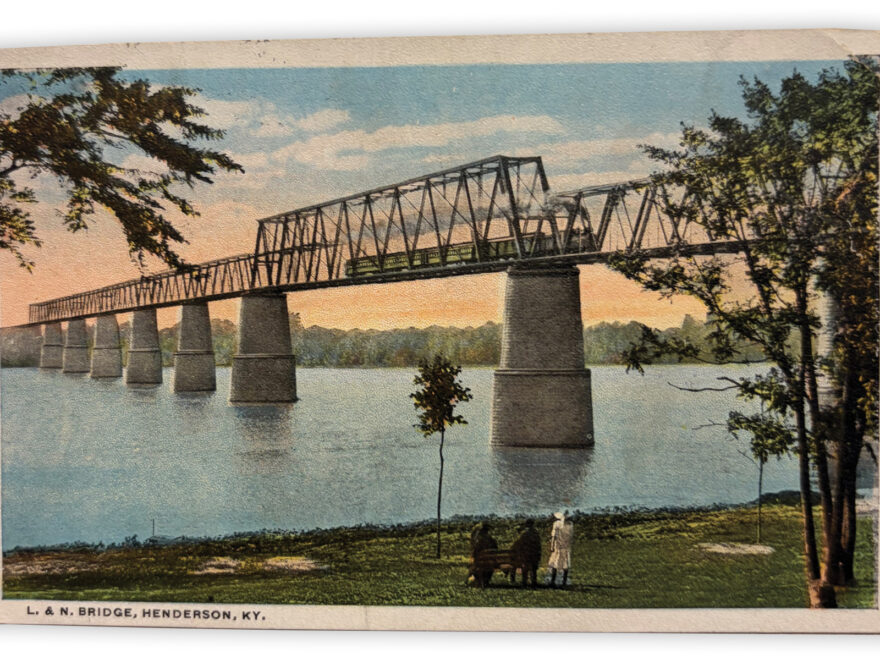
In 1932, about 4,000 people attended the dedication of the first vehicle bridge connecting Henderson and Evansville. The bridge, now the northbound span of the twin bridges, was built for approximately $2.4 million, with the federal government paying half and Kentucky and Indiana splitting the remainder.
The three-day celebration began on July 4, 1932, when the governors of Kentucky and Indiana walked across the bridge from opposite directions and shook hands in the middle. Festivities continued at Dade Park, now Ellis Park, where the crowd welcomed Ralph Modjeski and Frank Masters, the two world-famous engineers who designed the bridge.
Following the speeches, spectators were treated to a flyover by a squadron of 22 Army airplanes led by Jimmy Doolittle, then one of the nation’s foremost stunt pilots and later a World War II hero.
Raymond Graf Statues
Sprinkled throughout downtown Henderson and Audubon State Park are bronze sculptures created by Louisville artist Raymond Graf. The collection, begun in 2002, presents Graf’s three-dimensional interpretations of Audubon paintings featured in The Birds of America. Thirteen of the sculptures include an added surprise — a small creature hidden on the back — encouraging visitors to look more closely.
ADMIRAL Husband Kimmel
The statue along the Ohio River near Second Street is another Raymond Graf creation, honoring Henderson native Admiral Husband Kimmel.
Along with six siblings, Kimmel grew up in a large frame farmhouse at 512 N. Green St. At age 16, he graduated as valedictorian of Henderson High School and later graduated with honors from the U.S. Naval Academy in 1904.
Kimmel later served as commander of the U.S. Pacific Fleet on Dec. 7, 1941 — “a date which will live in infamy” — when Japan attacked Pearl Harbor. Henderson’s Kimmel Field is named in his honor.
In Closing
When visitors finish a tour of Henderson, they invariably comment on the city’s beauty and cleanliness, its fascinating stories and the genuine friendliness of its residents. For me, however, Henderson is much more than a collection of attractive streets, historic tales and welcoming faces. Henderson is my true sense of place — the city I will always be proud to call home.
 Calling all Hendersonians!